
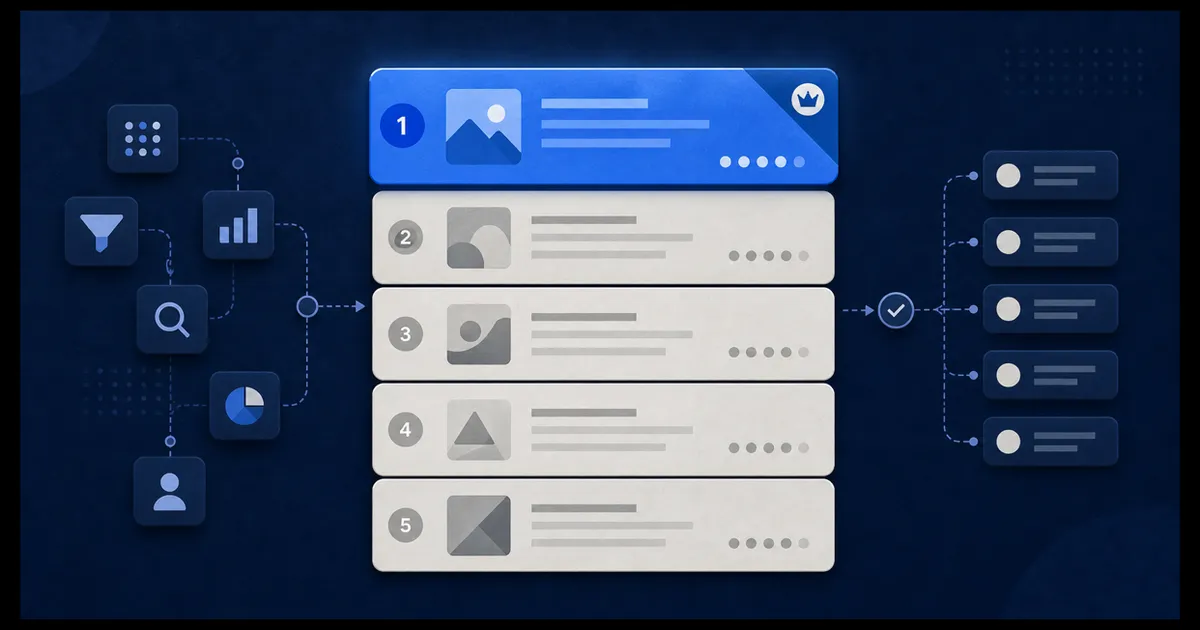
If you are searching for a Clay alternative, the real question is usually not “what tool has the most enrichment providers?”
It is “do we actually need a data workflow platform, or do we need a simpler way to find the right people to contact?”
Clay is powerful. For RevOps teams, growth engineers, and agencies with clear data logic, it can be a serious advantage. You can enrich lists, combine data providers, run research steps, and push records into outbound systems. But many founder-led teams buy Clay before they know exactly what workflow they want to run. That is when it starts to feel like a spreadsheet, a credit model, and an operations project at the same time.
This guide compares Clay alternatives by the job they are best at: warm signal follow-up, contact data, sales intelligence, social signal monitoring, and simple LinkedIn contact enrichment. Embers is first because this site is written for LinkedIn-led founders, but it is not the best answer for every team.
If you want the direct Embers comparison, use the Clay alternative deep dive or Embers vs Clay after this shortlist.
Quick shortlist
| Tool | Best for | Pricing shape | Main trade-off |
|---|---|---|---|
| Embers | Founder-led teams turning LinkedIn engagement into warm pipeline | Self-serve plan from $49/mo | Not a broad enrichment platform |
| Apollo | Teams that need contact data plus outbound execution | Free and paid per-user plans | Can push teams toward cold volume |
| Cognism | Sales teams that need premium B2B data and phone coverage | Quote-based | Usually too heavy for early founder-led teams |
| Trigify | Teams tracking social signals and market conversations | Public plans from $40/mo | Better when you already know what signals to watch |
| Kaspr | Reps enriching LinkedIn profiles with emails and phone numbers | Free and paid credit plans | Contact data only, not timing or intent |
| ZoomInfo | Enterprise teams standardizing sales intelligence | Enterprise contracts | Expensive and overbuilt for many small teams |
How we picked the Clay alternatives
A useful Clay alternative should not merely be “less expensive Clay.” If Clay is the right product class for your team, a cheaper version may still leave you with the same operating problem.
We evaluated the alternatives on five criteria.
Workflow fit: Does the tool create a daily prospecting workflow, or does it only add data to a list?
Setup time: Can a founder or small sales team use it without a dedicated GTM ops owner?
Signal quality: Does it help identify who is worth contacting now, or does it only enrich people you already selected?
Pricing clarity: Can a small team predict its monthly cost without modeling credits, seats, and add-ons?
LinkedIn fit: Does it help with LinkedIn-led prospecting without asking the founder to scale risky automation?
Clay scores high on enrichment flexibility. The alternatives below win when your bottleneck is different.
1. Embers
Embers is the best Clay alternative when your strongest lead source is already visible on LinkedIn.
The usual founder-led pattern is simple. You post. You comment. Prospects, peers, competitors, and future buyers start appearing in your engagement. LinkedIn shows you the activity, but it does not sort the people behind it into a sales queue.
Embers does that job. It turns supported public LinkedIn signals into a ranked lead queue, scores people against your ICP, enriches basic role and company context, and drafts a manual DM grounded in the signal that surfaced the person.
That makes it different from Clay. Clay starts with a list and asks what data should be added to it. Embers starts with a public signal and asks who deserves follow-up today.
Choose Embers if:
- You are doing founder-led sales.
- You already post, comment, or monitor competitor conversations on LinkedIn.
- You want a daily queue, not a custom enrichment workflow.
- You care about avoiding LinkedIn password, cookie, Chrome extension, and automated account-action risk.
Do not choose Embers if you need a general enrichment engine, a multi-provider waterfall, or custom workflow logic across dozens of data sources. Clay is better for that.
Pricing is simple by design. Embers starts at $49/mo with a 7-day trial, payment method required.
Useful next step: read the Clay alternative deep dive if you are specifically choosing between Clay and Embers.
2. Apollo
Apollo is the practical Clay alternative when you need a contact database and outbound execution in one place.
Clay can enrich and prepare data, but most teams still need somewhere to run outreach. Apollo bundles prospecting, contact data, email sequencing, and account workflows into one sales platform. That makes it easier to operationalize outbound if your team is still early and does not want to stitch together a separate stack.
Apollo is strongest when the bottleneck is contact coverage. If you already know the personas, accounts, and segments you want to pursue, Apollo can help you find emails, build lists, and launch sequences faster than a fully custom Clay workflow.
The trade-off is that Apollo can make volume feel too easy. A large contact database plus sequences can create the illusion of progress before your ICP, timing, and message are sharp.
Choose Apollo if:
- You need contact data and sequencing in the same system.
- Your team sells through email as much as LinkedIn.
- You have a clear ICP and want a faster outbound operating layer.
Skip Apollo if the problem is lead timing. A valid email address is not the same as a reason to send.
Apollo publishes current plan details on its pricing page. Check that page before buying because credit rules and plan packaging change.
3. Cognism
Cognism is the Clay alternative for teams that want premium sales intelligence more than flexible workflow building.
The fit is usually larger sales teams, not solo founders. Cognism focuses on high-quality B2B contact data, phone-verified contacts, company data, and CRM integrations. If your outbound motion depends on accurate mobile numbers and compliance-conscious data coverage, Cognism can be worth evaluating.
Compared with Clay, Cognism is less of a blank canvas. That can be a benefit. You are not building the data system from scratch. You are buying a sales intelligence source that is meant to feed reps and systems with cleaner records.
The trade-off is cost and fit. Cognism says pricing is based on business needs and does not publish a simple self-serve monthly entry point on its pricing page. For founder-led teams that want to move quickly, quote-based sales intelligence can be more process than they need.
Choose Cognism if:
- Phone-verified contacts matter to your outbound motion.
- You have a sales team that can use premium data consistently.
- You want a vendor-managed data source more than a workflow builder.
Skip Cognism if you need a lightweight founder workflow or if LinkedIn engagement is already generating warm signals you have not worked yet.
4. Trigify
Trigify is a stronger Clay alternative when your prospecting motion starts from social signals.
Where Clay helps teams enrich lists, Trigify helps teams monitor social activity and identify people engaging around relevant topics. That makes it relevant when your market talks publicly on LinkedIn and you want a way to turn those conversations into prospecting inputs.
This can overlap with Embers, but the workflow emphasis is different. Trigify is useful when you want broader signal intelligence and contact discovery. Embers is more focused on turning supported LinkedIn engagement into a daily manual outreach queue for founder-led teams.
Choose Trigify if:
- You know which topics, competitors, or market conversations to monitor.
- You want social listening and signal intelligence as a prospecting source.
- You are comfortable with a credit-based workflow.
Skip Trigify if you mainly need list enrichment or a general data workflow platform.
Trigify lists Starter, Max, and Enterprise plans on its pricing page, with public pricing starting at $40/mo at the time of writing.
5. Kaspr
Kaspr is the simple Clay alternative when the job is LinkedIn contact enrichment.
It is not trying to replace Clay as a workflow platform. It helps salespeople find B2B emails, phone numbers, and company information from LinkedIn profiles, groups, and events. For reps who already qualify prospects manually on LinkedIn, that narrowness can be useful.
Kaspr fits a straightforward workflow:
- Find a relevant person on LinkedIn.
- Confirm the role and company fit.
- Enrich contact details.
- Export the lead to your CRM or outreach system.
That is much simpler than building an enrichment waterfall in Clay. It is also less powerful.
Choose Kaspr if:
- You want contact data from LinkedIn profiles without designing a full GTM workflow.
- Reps already know who they want to enrich.
- You value speed and simplicity over orchestration.
Skip Kaspr if you need custom data logic, deep company research, or timing signals.
Kaspr publishes a free plan and paid credit-based plans on its pricing page.
6. ZoomInfo
ZoomInfo is not a lightweight Clay alternative. It is an enterprise sales intelligence platform.
It belongs on the shortlist because many teams evaluating Clay are really asking whether they should buy a broader data platform instead. ZoomInfo can make sense when the company needs a mature sales intelligence system with contact data, company data, intent signals, enrichment, and enterprise integrations.
For founder-led teams, that is usually too much too early. The cost, contract motion, and operating overhead rarely fit a small team still proving its outbound motion.
Choose ZoomInfo if:
- You have a mature sales org.
- You need company-wide sales intelligence and data operations.
- Budget and procurement are not the main constraint.
Skip ZoomInfo if you are a founder deciding who to message this week.
Clay vs alternatives comparison
| Decision point | Stay on Clay | Choose an alternative |
|---|---|---|
| You need custom enrichment workflows | Yes | Usually no |
| You need a simple daily lead queue | Usually no | Embers |
| You need outbound database plus sequences | Maybe | Apollo |
| You need premium phone-verified data | Maybe | Cognism |
| You need social signal monitoring | Maybe | Trigify or Embers |
| You need quick LinkedIn contact enrichment | Usually too much | Kaspr |
| You are an enterprise sales org | Maybe | ZoomInfo |
When to stay on Clay
Stay on Clay if you have a clear workflow owner and a specific data process to build.
Clay is a strong choice when you can say exactly what should happen to each record: where the lead starts, which enrichment steps matter, which data providers to call, how to score the account, which fields should be written to CRM, and what system receives the output.
It is especially useful for:
- Agencies building repeatable enrichment workflows for clients.
- RevOps teams consolidating multiple data providers.
- Growth teams testing advanced outbound hypotheses.
- Sales teams that need custom account research at scale.
Clay’s public pricing page currently lists Launch, Growth, and Enterprise options, with the Launch plan starting at $185/mo at the time of writing. The price is only one part of the decision. You also need to understand credits, actions, integrations, and who will maintain the workflow.
When to pick a Clay alternative
Pick an alternative when Clay is solving a more complex version of the wrong problem.
If you do not have a reliable lead source yet, buying enrichment will not fix targeting. If your strongest prospects are already engaging with your LinkedIn content, a database workflow may be slower than a signal queue. If all you need is verified contact data, a focused enrichment tool may be easier to control.
A practical founder-led stack is usually smaller than people think:
- Use LinkedIn and Sales Navigator to understand the market.
- Use Embers to work warm signals from posts, comments, and competitor conversations.
- Add Apollo, Kaspr, or Clay only when contact data or workflow automation becomes the actual bottleneck.
That order keeps the team close to real buyer behavior. It also prevents the common mistake of scaling cold data before you know which signals matter.
FAQ
What is the best Clay alternative for founders?
Embers is the best Clay alternative for founders who sell through LinkedIn and want to turn public engagement into a ranked warm lead queue. Apollo is better if the founder needs contact data and email sequencing. Clay remains better if the founder needs custom enrichment workflows.
Is Clay worth it for a small team?
Clay can be worth it for a small team with a clear workflow owner and a specific enrichment process. It is usually too much if the team only needs to decide who to contact from LinkedIn activity.
Is Apollo better than Clay?
Apollo is better when you want contact data and outbound execution in one product. Clay is better when you want to build custom enrichment workflows and connect multiple data sources.
Can Embers replace Clay?
Embers can replace Clay only when the job is LinkedIn signal qualification and manual follow-up. It does not replace Clay for broad enrichment, data waterfalls, or custom GTM automation.
What should I compare before buying Clay?
Compare Clay against your actual workflow. If the daily job is warm LinkedIn follow-up, compare Embers. If the job is contact data and sequencing, compare Apollo. If the job is premium sales intelligence, compare Cognism or ZoomInfo.
Reading about LinkedIn lead gen? Check who's already engaging on your topics.
Free Signal Audit. One public signal, no email. Up to three with a work email. No card.
Scan a keyword free →No card. One public signal free. A work email unlocks up to three.
Related articles
How to Use LinkedIn Sales Navigator to Find Warm Leads
Learn how to use LinkedIn Sales Navigator with this step-by-step guide. Go from basic setup to advanced filters and signal-based selling to find real prospects.
How To Find Connections On LinkedIn: Your Guide To Leads
Learn how to find connections on LinkedIn with advanced search, content signals, and network tiers. Find high-intent leads & build your pipeline.

10 Best Social Media Lead Generation Tools for 2026
Find the best social media lead generation tools for B2B. Our 2026 list covers signal intelligence, automation, and data enrichment for warm pipeline.